A long time ago, when the world was young and the temperature was much lower, I wrote for a newspaper. I did that for 10 years and since my beat was books and publishing, I was a regular attendee at book fairs, book launches, and the occasional Palanca awards night.
I used to be on top of things when it came to books and publishing, but when I changed careers I wasn’t as on the pulse of things as I used to be. I got a little taste of that again during the Philippine Book Festival last month, where I got to see facsimiles of the Noli Me Tangere and El Filibusterismo. I don’t know if that article is still online since the paper I used to work for nuked their old site, but I actually got to see the original Noli and Fili when the National Library of the Philippines had German restorers over to repair them. That was exhilarating.
The pictures below are the facsimiles, by the way! Because the Germans told the press way back then that we couldn’t take pictures of the originals because they were too delicate.


Anyways! That long introduction was for me to say that while walking around the venue, I managed to come across this book which was apparently nominated for a National Book Award and I thought there’s probably no harm in checking it out!
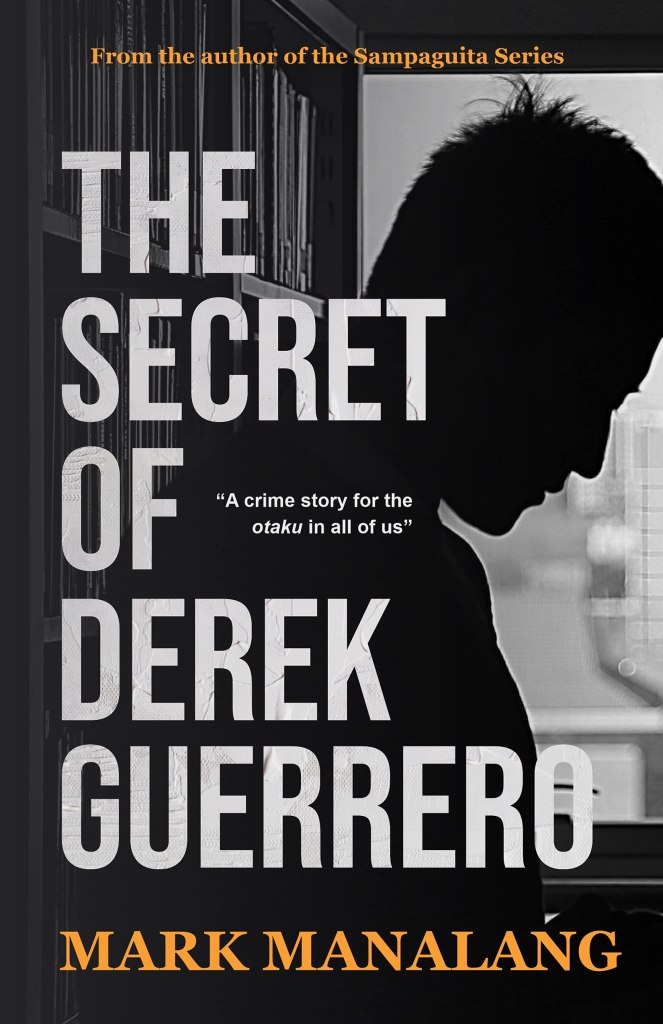
The Secret of Derek Guerrero tells the story of 31-year-old Derek Guerrero, who isn’t just a journalist covering the police beat but is also a moderately successful crime fiction author. Due to a chance encounter at a bookstore, Derek feels compelled to write a romance novel out of spite. To help him out, his editor pairs him up with Kim Velasquez, a bestselling romance author who is looking for someone to help polish her work for international publication.
As the pair work together on their respective projects, they both become intrigued by each other, as it seems like there’s more to both of them than meets the eye. But their growing attraction to each other may just have to take a back seat as a series of anime-inspired murders happening around the metropolis seem to be targeting people in Derek’s orbit — which includes Kim.
Will Derek solve the serial murders before they strike even closer to home? And will he and Kim ever reveal how they feel about each other?
As I’ve grown older, I’ve learned to not take awards at face value. As much as they’re a good guideline, at the end of the day they’re just validating the taste of a certain group of people and the taste of that group of people may not be your taste. Which is a longwinded way of saying that as much as I was drawn by the National Book Award sticker on the cover, I tried to get into this book with as few expectations as possible.
As someone who enjoys anime, I liked the references that I recognized and was intrigued by the ones that I’ve never heard of. The ones I’ve never heard of were especially intriguing especially when they were connected to the murders featured in the book.
Another thing that I liked, which I admit is something that I’ve grown to like as I’ve gotten older, is recognizing some of the landmarks mentioned in the book. I’ve spent so much of my childhood (childhood?) reading books from Western authors with locations I can never fully visualize in my head and now that I’ve been reading more and more local work it’s refreshing to see my world reflected back to me.
Since this is partly crime fiction, it did give me a little satisfaction that I’d already figured out who the killer was more or less 50 pages in because it made me feel like I had been picking up on the clues sprinkled all over the book. Although I can also understand people finding that as a negative because you sort of want your crime fiction to keep you guessing until the reveal. Your mileage may vary!
But when we dig deeper into the book, we really get to see the cracks that the National Book Award sticker on the cover fails to hide. The ease with which one can figure out who did the murders is one thing, but liking or disliking that could be a matter of taste. What’s a little harder to ignore is how some of the situations in the crime fiction parts of the story just seem…improbable.
Derek Guerrero, for instance, leaned a little too heavily into Gary Stu territory. While I didn’t cover the police beat when I worked for a newspaper, I had friends who did and quite frankly there’s literally two other people I know who came from police beat that most Filipinos know by name, and they got that fame from radio and television work and not from their time in the newspaper. The amount of people that knew of Derek Guerrero and his “reputation” ranged from security guards to actual officers of the law and it was just a little too much for me. If you’re that known for your newspaper writing and you haven’t parlayed your fame into at least a radio gig then I just can’t buy into the whole fantasy. And I’m all about buying into the fantasy! I’m a fan of drag queens for crying out loud!
David’s Gary Stu-ness doesn’t stop with the crime fighting though, it extends into his author life as well. The book starts out by saying that he’s a moderately successful crime fiction author, but throughout the book everybody just seems to know him and his work. Even readers from an entirely different genre like romance know about his crime fiction work, and as anybody who’s spent any amount of time in romancelandia knows, that means you’re pretty freaking famous if even pretty faithful audiences like romance readers know about your work. So what’s the truth?
And since we’re talking about romance readers, I think the romance parts of the novel aren’t going to go over very well either. Derek says some pretty unflattering things about the genre, mostly outdated things and generalizations that aren’t really even about the genre itself but about authors who publish on sites like Wattpad. I don’t think he really redeems himself by the end of the novel either. In fact, he probably ends up looking even worse, and I can’t even say why because I don’t know how to hide spoilers here.
Derek isn’t really written well as a romantic lead either, especially if you’re an avid romance reader. He’s very Nice GuyTM throughout the book, and rather than seeming gentlemanly, he comes off as being sanctimonious. It doesn’t help that his sanctimoniousness is supported by the book. The novel’s attitude towards sex is…outdated, to say the least.
There’s also a lot of other things that would just piss off any number of readers, even outside of the romance genre. Naming a group chat of men in their 30s “The Onii-chans” seriously shows a lack of awareness of the wider pop culture conversation around that term and is really something that an editor with a great eye would have spotted.
In fact, I think a lot of the problems of the book could have been solved by a developmental edit because there are bits and pieces of it that could be a great story given proper guidance and coaxing from a skilled editor. I don’t know who edited this book, but they certainly did not spend enough time in either journalism, crime fiction, or romance, because they should have spotted a lot of the things that hobble the novel.
And I’m just talking about the story itself! Because throughout the book, there are a lot of glaring grammatical mistakes, whether it’s preposition use or tenses or just whole words missing from paragraphs. I know that awards reflect the taste of the people doing the judging, but I would think that for a book award, grammar should at least play a bigger role than vibes?
I tried really hard to not let that National Book Award sticker influence how I approached the book, but I did end up thinking how did this even become a finalist? Again, it’s different strokes for different folks, but considering the honestly unpolished state of the book I bought, who is stroking to this, pun intended? Did the judges receive a different copy than the one I bought?
 Ron Does Stuff
Leave a comment